

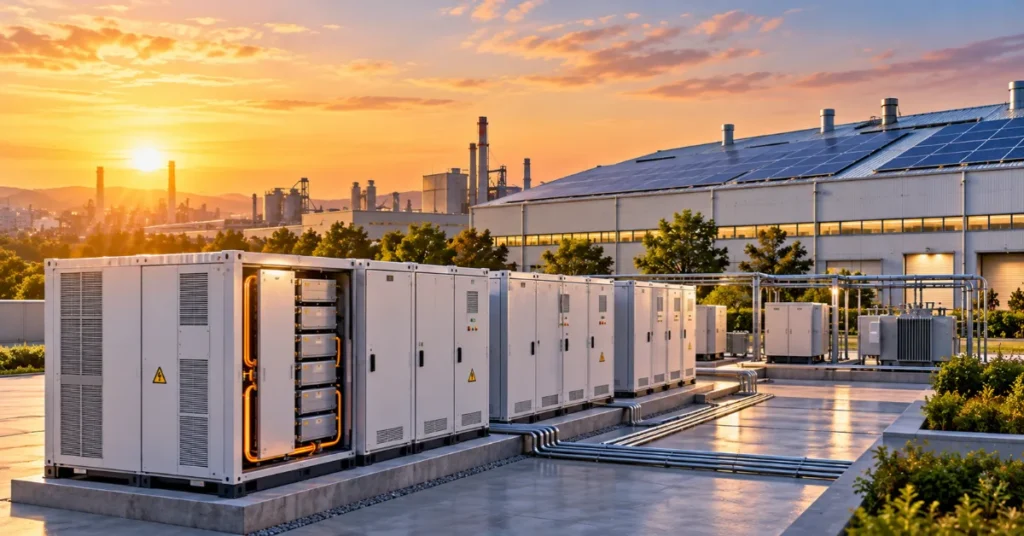
BESS for Commercial & Industrial Businesses in India | 2026 Guide
Electricity is one of the major operating expenses for many commercial and industrial businesses in India.
Your blog category
Electricity is one of the major operating expenses for many commercial and industrial businesses in India.

Introduction Rising electricity costs are encouraging Indian manufacturers to explore solar power as a long-term energy solution. However, installing solar panels is not simply about using the maximum available rooftop space. The right system size depends on your factory’s electricity consumption, operating hours, available roof area, sanctioned electrical load, and future energy requirements. Having a good understanding of how to size an industrial solar system for your factory can help you reduce electricity expenses, improve energy efficiency, and make a better investment decision. This guide explains the key factors, calculations, and practical considerations businesses should evaluate before planning an industrial solar project. Understand Your Factory’s Electricity Consumption The first step in sizing a solar system is understanding how much electricity your factory consumes. Review your electricity bills for the past 12 months to identify your monthly consumption, peak demand, tariff structure, and seasonal variations. Electricity consumption is usually measured in kilowatt-hours (kWh), commonly called units in India. For example, if your factory consumes 30,000 units per month, its average daily consumption is: 30,000 ÷ 30 = 1,000 units per day This figure provides a starting point for estimating the required solar capacity. However, your total monthly consumption does not tell the whole story. You should also identify when electricity is being used. A factory operating primarily during daylight hours can often utilise rooftop solar generation more effectively than a facility running most of its operations at night. For a more accurate assessment, examine: These details help determine a practical system size instead of relying on a rough estimate. Calculate the Required Solar Plant Capacity Once you know your factory’s electricity consumption, the next step is estimating the solar capacity needed to meet your energy requirements. The output of a solar plant depends on sunlight availability, location, panel orientation, system design, temperature, shading, and equipment efficiency. Therefore, the same capacity may generate different amounts of electricity at different locations. A useful preliminary formula is: Required solar capacity (kW) = Daily electricity requirement (kWh) ÷ Daily generation per kW For example, let’s say a factory needs 1,000 units of electricity daily and a proposed solar installation is estimated to generate 4 units per kW per day. The calculation would be: 1,000 ÷ 4 = 250 kW This suggests that a 250 kW solar system could be a starting estimate for matching the factory’s daily energy consumption. The assumed generation figure is illustrative. Actual generation should be estimated using location-specific solar irradiation, system losses, and professional energy modelling. It is also important to differentiate between meeting total electricity consumption and matching daytime demand. A system may generate enough electricity over an entire day but still fail to cover demand during certain hours. Check the Available Factory Rooftop Area Even if your factory consumes a large amount of electricity, the rooftop may limit how much solar capacity you can install. This makes a roof assessment an essential part of planning an industrial solar project. Start by measuring the total roof area and identifying the portions suitable for panel installation. Not every square metre can accommodate solar panels because factories often have ventilation systems, skylights, exhaust equipment, water tanks, and maintenance pathways. As an estimate, a rooftop solar system may require approximately 8–10 square metres per kW of installed capacity, depending on panel technology, layout, spacing, and site conditions. For example, a 250 kW system may require around 2,000–2,500 square metres of usable roof area. This is an indicative estimate, and the final requirement can vary with the proposed design. Before installing industrial rooftop solar, consider these key factors: Match Solar Capacity With Daytime Electricity Demand One of the most important decisions is determining how much solar electricity your factory can actually use when it is generated. Solar panels generally produce the most electricity during daylight hours, while factory consumption may fluctuate throughout the day. If solar generation consistently exceeds on-site demand, the value of the surplus electricity will depend on applicable grid-export arrangements and state regulations. Consider a factory that consumes 1,000 units daily but uses only 500 units during solar-generating hours. Installing a system designed to generate all 1,000 units during the day could result in surplus production at certain times. In this situation, a smaller system may offer better self-consumption economics. Alternatively, the business could evaluate battery storage, flexible production schedules, or permitted grid-export arrangements. To determine the right capacity: Consider Electrical Load and Future Expansion Your factory’s connected load and approved electricity limit are important, but you should not use them alone to decide the size of your solar system. A facility may have a high sanctioned load because it occasionally operates several machines simultaneously, even though its average electricity consumption is considerably lower. Conversely, a factory with continuous production may have a relatively stable demand throughout the day. A detailed assessment should examine transformer capacity, existing electrical infrastructure, inverter sizing, protection systems, and the feasibility of connecting solar generation to the factory’s electrical network. Future expansion also deserves attention. If your business plans to add machinery, extend operating hours, or increase production over the next few years, the solar design should account for those changes where practical. Proper engineering helps avoid problems such as undersized electrical equipment, unsuitable inverter configurations, and generation that does not align with actual demand. Also Read: Why Does Engineering Matter in a Solar EPC Company? Choose the Right Industrial Solar Installation Model After estimating the capacity, roof area, and energy requirements, decide how the solar system will be installed and financed. The right approach depends on your investment budget, ownership preferences, and electricity procurement strategy. The main options include: For example, a factory with a large, suitable rooftop and substantial daytime consumption may benefit from an on-site installation. A business with limited roof space but substantial electricity demand may also consider open access. When evaluating an industrial solar installation, compare the total project cost, expected generation, maintenance obligations, applicable charges, and projected savings rather than choosing a solution based on capacity alone. You can
Electricity is one of the biggest operating expenses for factories, warehouses, hotels, hospitals, shopping complexes, and other commercial buildings.
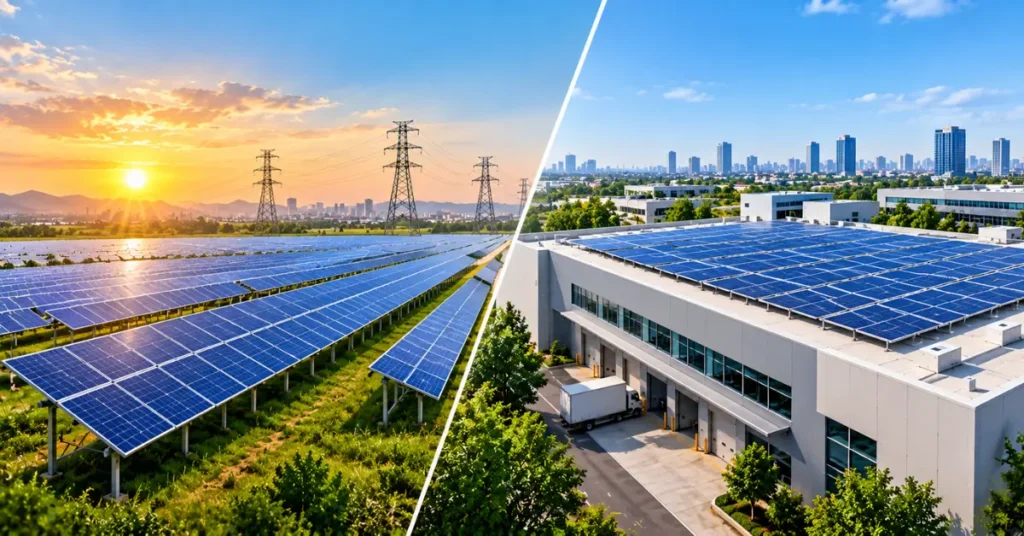
For businesses looking to reduce electricity costs and increase renewable energy use, solar open access and rooftop solar are two practical options.
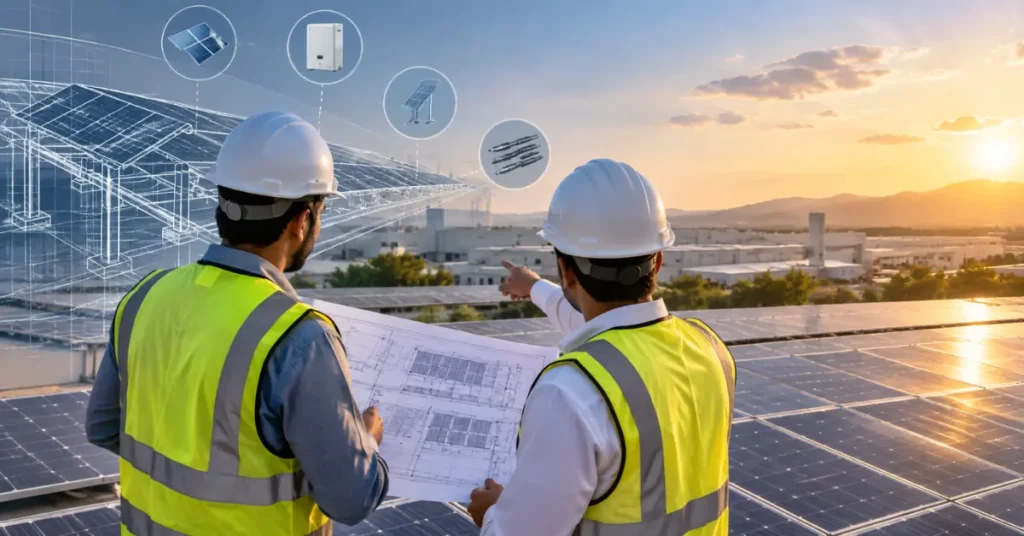
For many industries, increasing power costs and unreliable energy supply can directly affect operational expenses and productivity.

Installing commercial rooftop solar can help businesses lower electricity costs while making better use of unused roof space.

Rising electricity costs, peak demand and unexpected power interruptions can affect business operations.

Large industrial businesses often require more electricity than their rooftop solar panels can generate. Even with full utilisation of available rooftop space,
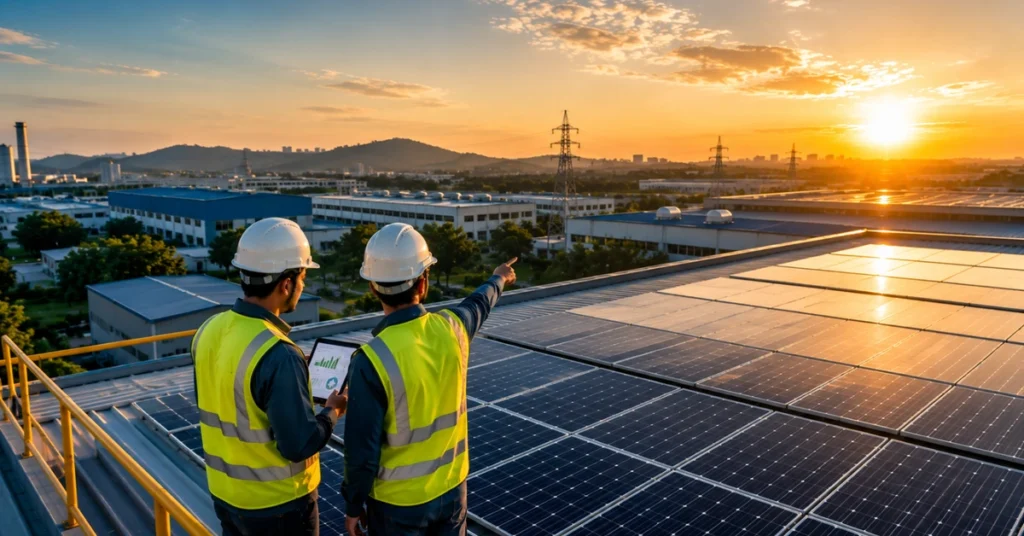
For commercial and industrial businesses, electricity is a major operating expense that can directly influence production costs and long-term profitability.
For many businesses, electricity is one of the biggest operating expenses. As energy prices continue to rise, many companies are