

Introduction
For many industries, increasing power costs and unreliable energy supply can directly affect operational expenses and productivity. At the same time, businesses are under growing pressure to reduce their carbon footprint.
Solar energy offers a practical way forward, but managing design, equipment, installation, and performance can be challenging without the right expertise. A solar EPC company brings these requirements together under one roof, managing everything from engineering and procurement to installation and commissioning.
This article explores why engineering expertise is essential when choosing a solar EPC company and how the right technical knowledge can improve the efficiency, reliability, and long-term performance of an industrial solar project.
1. Understanding the Role of Engineering in a Solar EPC Project
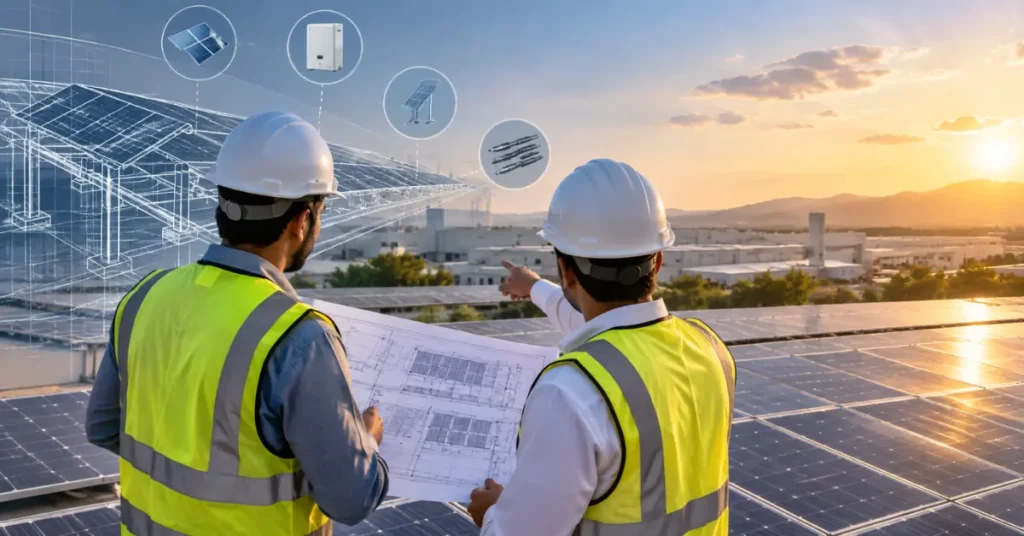
Engineering forms the foundation of a solar project. Before installation begins, technical teams assess the site, understand the facility’s energy consumption, study available space, and identify potential limitations.
The findings help determine the appropriate system capacity, equipment configuration, mounting method, electrical design, and safety measures. Good engineering also ensures that procurement and construction follow a design that is technically practical rather than relying on standard assumptions.
2. What Solar Engineering Covers Before Installation
Solar engineering involves several important activities before a project reaches the installation stage. These may include:
- Site and rooftop assessment
- Electricity consumption and load analysis
- Shadow and space assessment
- Structural evaluation
- Solar module and inverter selection
- Electrical system design
- Mounting structure planning
- Cable routing and protection
- Safety and compliance planning
- Generation and performance
This preparation gives the project team a clearer understanding of what can realistically be installed and how the system should operate.
3. How Engineering Helps Design the Right Solar System
Every commercial or industrial facility has different energy requirements. A system that works well for one factory may not be suitable for another.
Engineering helps match system capacity with electricity demand and available installation space. It also considers module orientation, shading, inverter configuration, equipment compatibility, and future expansion requirements. A properly engineered design can make better use of available space while reducing avoidable losses and technical complications.
4. Engineering for Different Commercial and Industrial Sites
Solar projects can be installed across factories, warehouses, offices, educational facilities, hotels, and other commercial properties. Each site can present different engineering challenges.
For example, a rooftop project may require structural checks and careful planning around existing equipment, walkways, drainage, and maintenance areas. Ground-mounted projects may require different considerations related to land conditions, foundations, cable routes, and site layout.
This is why experienced solar EPC companies should evaluate the individual characteristics of every project instead of applying a one-size-fits-all design.
Also Read: Why Choosing the Right Industrial Solar Company Matters
5. How Good Engineering Improves Solar Project Performance
Strong engineering can influence the performance and reliability of a solar plant throughout its operating life. A well-planned system can improve space utilisation, minimise unnecessary electrical losses, support safer installation, and make maintenance easier.
It can also help identify potential problems before construction begins. Addressing these issues during the design stage is generally easier and less disruptive than correcting them after equipment has been installed.
6. Common Engineering Mistakes That Increase Project Risks
Weak engineering can create problems that become expensive to correct later. Common issues include:
- Incorrect system sizing
- Insufficient structural assessment
- Poor cable routing
- Inadequate space for maintenance
- Improper equipment selection
- Failure to account for shading
- Weak protection and safety planning
- Ignoring future expansion requirements
Such mistakes can affect generation, safety, project timelines, and long-term operating costs. Thorough engineering helps reduce these risks before they reach the construction stage.
7. What to Look for in a Solar EPC Company’s Engineering Expertise
When comparing solar EPC companies in India, businesses should look beyond pricing and equipment brands. A reliable partner should be able to demonstrate technical knowledge through project experience, detailed site assessments, engineering documentation, realistic generation estimates, and clear design explanations.
Businesses can also review completed projects with similar capacities and site conditions. This can provide a better indication of whether the provider understands the technical requirements of commercial and industrial installations.
For businesses searching for the best solar EPC companies in India, engineering capability should therefore be treated as a key selection criterion rather than an additional feature.
8. Why Alligator Solar Takes an Engineering-Led Approach
Alligator Solar follows a commercial and industrial (C&I)-focused approach, supporting businesses with solutions designed around their operational and energy requirements. Its offering covers onsite solar, rooftop and ground-mounted systems, open access solar, OPEX/CAPEX models, battery energy storage, EV charging, and asset management.
Also Read: Battery Energy Storage System: Why Businesses Need It
The company has completed 250+ projects, operates across 10+ states, has more than 10 years of experience, and reports 95% customer satisfaction. Its integrated approach brings engineering, procurement, installation, commissioning, and ongoing asset management together.
Conclusion
Engineering expertise can make a significant difference to the success of a commercial or industrial solar project. From understanding site conditions and energy requirements to selecting equipment and planning installation, engineering influences almost every stage of the project.
Businesses should therefore evaluate an EPC provider on more than price. Technical capability, relevant project experience, design quality, safety planning, execution, and long-term support all deserve careful consideration.
Looking for an experienced solar EPC partner for your commercial or industrial project?
Connect with Alligator Solar to discuss your energy requirements and explore a suitable solar solution.
Frequently Asked Questions
Q1. Why is engineering expertise important in a solar EPC project?
Engineering helps ensure proper system sizing, equipment selection, structural safety, electrical design, and site-specific planning for better project performance.
Q2. What should businesses look for when choosing a solar EPC company?
Businesses should consider engineering expertise, relevant project experience, site assessment capabilities, design quality, equipment selection, and long-term support.
Q3. How does engineering affect solar system performance?
Proper engineering can improve space utilisation, reduce avoidable electrical losses, support safer installation, and make maintenance easier.
Q4. What engineering assessments are required before installing solar?
Common assessments include site and rooftop evaluation, electricity load analysis, shading and space assessment, structural evaluation, and electrical system planning.
Q5. Is the lowest-priced solar EPC company always the best choice?
Not important. Businesses should consider engineering capability, project experience, system design, safety, execution quality, and long-term value rather than price alone.