Commercial Solar Rooftop

Solar Open Access vs Rooftop Solar
Blog, Commercial Solar Rooftop, Solar Open Access

Solar Open Access vs Rooftop Solar: Which Is Better for Your Business?

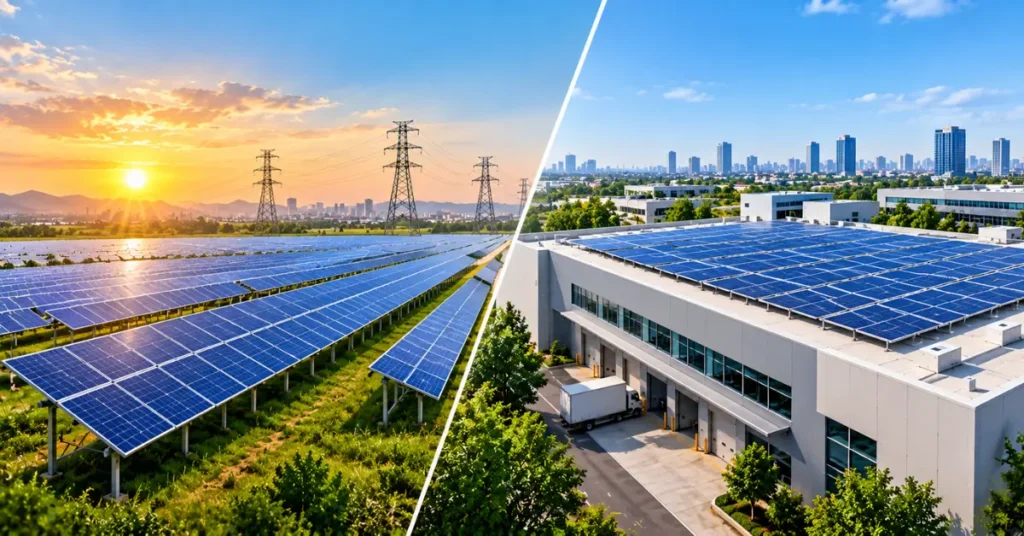
Introduction For businesses looking to reduce electricity costs and increase renewable energy use, solar open access and rooftop solar are two practical options.  But which one is better for your business?   Rooftop solar can be suitable for businesses with sufficient roof space and strong daytime electricity consumption. Solar open access may be suitable for businesses with high electricity demand, limited rooftop space, or a need for larger renewable energy capacity.  In this article, we have briefly compared solar open access vs rooftop solar on key factors such as investment, space, savings, and scalability.  This comparison can help businesses understand which solar solution may be more suitable for their needs.  What Is Solar Open Access? Solar open access allows eligible businesses to procure renewable electricity from a power generator through the electricity grid, subject to applicable regulations, contracts and charges.  The electricity is supplied through the existing power grid under applicable open-access regulations and commercial arrangements. This model can be useful for businesses with high electricity consumption or limited space for installing a large solar system at their facility. Depending on the arrangement, a business may enter into a power purchase agreement or another suitable procurement structure. Since regulations, charges, and eligibility requirements can vary between states, businesses should evaluate the applicable rules before making a decision. Also Read: Solar Open Access in India: Complete Guide for Businesses  What Is Rooftop Solar? A commercial solar rooftop system is a solar power system installed on the roof of a business, office, warehouse, or industrial building. It uses sunlight to generate electricity that can be used to run the company’s day-to-day operations.  The generated power can be used directly by the facility, reducing the amount of electricity it needs to purchase from the grid. A rooftop system can be suitable for businesses that have: A professional site assessment is important before beginning solar installation. Factors such as roof strength, shading, equipment placement, and available area can affect the size and performance of the system. Key Differences: Solar Open Access vs Rooftop Solar The table below highlights the major differences between solar open access and rooftop solar across key factors such as location, space, scalability, investment, and maintenance.  Factor Solar Open Access Rooftop Solar Location Off-site On-site Rooftop space Not required Required Scalability Generally higher Limited by available space Installation at premises Minimal Required Investment Model PPA or other structures may be available CAPEX, financing or other models Maintenance at facility Usually limited Required Best suited for High energy demand and limited space Facilities with suitable roofs Cost and Savings Cost is an important consideration when comparing both options. With rooftop solar, the business typically needs to account for solar panels, inverters, mounting structures, electrical components, installation, and ongoing maintenance. However, the system can generate electricity for many years, potentially providing substantial long-term savings. Solar open access can reduce the need for a business to develop a large solar plant at its own facility. However, the overall economics depend on more than the solar generation tariff. Transmission, wheeling, banking, cross-subsidy, and other applicable charges can influence the final delivered electricity cost. Therefore, businesses should compare the total cost of delivered power instead of considering only the initial solar tariff or installation cost. Space and Scalability Available space is one of the biggest differences between the two options. Rooftop solar depends on the amount of usable roof area. HVAC units, water tanks, skylights, shading, structural limitations, and access pathways can reduce the area available for panels. Consequently, businesses with high electricity requirements may not be able to install enough capacity on their roofs. Solar open access removes this physical limitation because the solar generating project can be located off-site.  This can make it attractive for large industrial facilities, warehouses, and commercial operations that need more renewable power than their premises can accommodate. Installation and Maintenance Rooftop solar requires detailed planning and on-site execution. The process generally includes site assessment, system design, equipment selection, installation, testing, commissioning, and ongoing maintenance. Businesses should carefully evaluate solar installation companies before selecting a project partner. Experience with commercial and industrial projects, engineering capabilities, equipment quality, safety standards, warranties, and after-sales support are important considerations. Open access reduces the need for major solar infrastructure at the consumer’s premises. However, businesses still need to assess contractual arrangements, grid connectivity, regulatory requirements, and applicable charges. Also Read: Why Choosing the Right Industrial Solar Company Matters  Solar Installation in India: What Businesses Should Consider The suitability of each model can vary across locations. Businesses evaluating solar installation in India should consider electricity tariffs, consumption patterns, available roof space, solar potential, financing options, grid conditions, and applicable state regulations. For open-access projects, state-specific policies and charges can significantly affect project economics. A solution that works well for one business may not necessarily provide the same benefits for another. A detailed feasibility assessment can help businesses compare expected savings and operational requirements before making a long-term commitment. Which Option Is Better for a Business? Neither rooftop solar nor solar open access is universally better. The right choice depends on a business’s electricity consumption, available space, financial objectives, and long-term energy strategy.  Rooftop Solar is suitable when: Solar Open Access is suitable when: A Hybrid Approach Businesses do not always have to choose only one option. A business may use rooftop solar for part of its electricity requirement and source additional renewable power through open access. This approach can help businesses make better use of available roof space while accessing additional renewable energy capacity. Businesses may also consider battery energy storage alongside rooftop or open-access solar where energy storage, peak-demand management, or backup support is required.  Also Read: Battery Energy Storage System: Why Businesses Need It  Conclusion The decision between solar open access and rooftop solar should be based on a business’s energy consumption, available space, financial objectives, regulatory environment, and future growth plans. Rooftop solar can work well for businesses with suitable premises and strong daytime consumption. Open access can provide greater flexibility for
Is Your Commercial Roof Ready for Solar 8 Things to Check
Blog, Commercial Solar Rooftop

Is Your Commercial Roof Ready for Solar? 8 Things to Check Before Installation

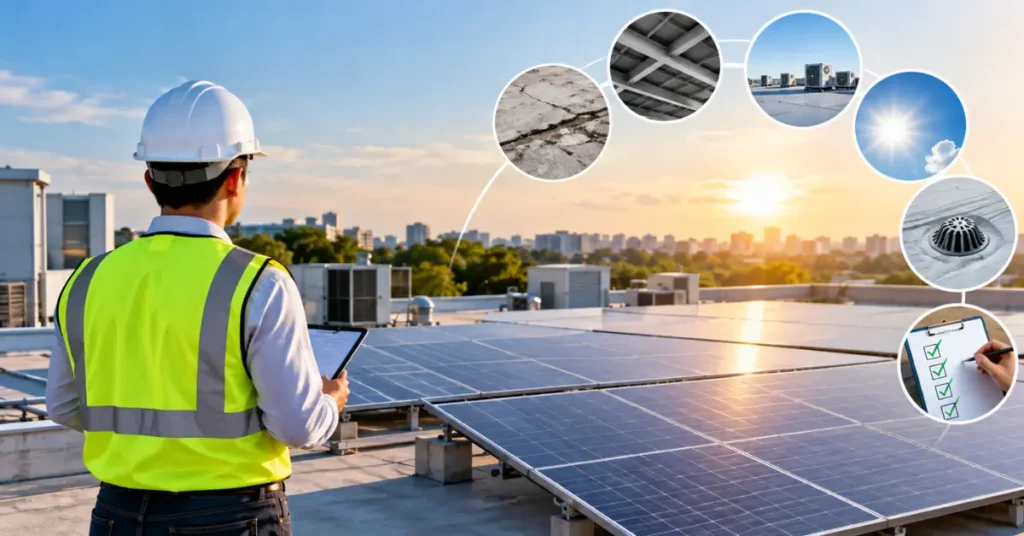
Introduction Installing commercial rooftop solar can help businesses lower electricity costs while making better use of unused roof space. However, not every commercial roof is ready for a solar installation, and installing panels without checking the roof first can lead to unexpected problems and additional costs. Before moving ahead, businesses should evaluate the roof’s age, condition, structural strength, available space, and sunlight exposure. A proper assessment can help identify potential issues early and make the installation process smoother and more reliable. So, what should businesses check before installing solar panels on a commercial roof? Here are 8 important things to consider. 1. Check Your Roof’s Age The roof’s age is one of the first things to consider. Solar panels are a long-term investment, so the roof should ideally have sufficient remaining life. If the roof is already nearing the end of its lifespan, installing solar before replacing it may create additional costs. Solar panels may need to be removed and reinstalled when the roof is replaced. 2. Inspect the Roof Condition Before solar installation, check for leaks, cracks, corrosion, damaged waterproofing, or other signs of deterioration. Existing problems should ideally be repaired before solar panels and mounting structures are installed. Fixing roof issues later can be more difficult and expensive. 3. Assess Structural Strength Solar panels and mounting structures add weight to the roof. Therefore, the building should be assessed to determine whether it can safely support the proposed solar system. A structural assessment is especially important for older commercial buildings and large industrial facilities. 4. Consider Your Commercial Roof Type Different commercial roofs require different solar mounting solutions. Flat roofs, metal roofs, and membrane roofs may each require specific installation methods. The mounting system should be selected according to the roof material, slope, structural capacity, and drainage requirements. 5. Measure the Usable Roof Space Not every part of a commercial roof can be covered with solar panels. HVAC units, water tanks, vents, skylights, walkways, and other equipment can reduce the usable area. A professional site survey can determine the available space and help create an efficient panel layout while maintaining access for maintenance. Also Read: Solar Open Access in India: Complete Guide for Businesses  6. Check Sunlight Exposure and Shading Solar panels need sufficient sunlight for efficient energy generation. Shadows from nearby buildings, trees, parapet walls, or rooftop equipment can reduce system output. Experienced solar installation companies can assess the site’s solar exposure and design the panel layout to minimise unnecessary shading. 7. Check Drainage and Accessibility Solar installation should not interfere with the roof’s drainage system. Poor drainage can cause water accumulation and potentially affect the roof over time. There should also be adequate access for cleaning, inspection, repairs, and maintenance. A good solar design considers both energy generation and long-term roof accessibility. A professional energy assessment can help determine whether a battery energy storage system is technically and financially suitable for a particular facility. 8. Choose the Right Installation Partner Choosing an experienced installation partner is essential for a successful commercial solar project. An experienced solar company can assess your roof and recommend a system based on its structure and your energy requirements.  Check the company’s previous projects, technical expertise, equipment quality, installation standards, warranties, and after-sales support. An experienced solar company can manage engineering, procurement, construction, installation, testing, and commissioning under one coordinated process. Also Read: Why Choosing the Right Industrial Solar Company Matters What If Your Roof Is Not Ready for Solar? If your roof requires repairs or structural improvements, you may not need to cancel your solar plans. Depending on its condition, you can consider repairs, waterproofing, structural upgrades, or roof replacement before installing solar. For an ageing roof, replacing it before commercial solar power installation may be more practical than removing the solar system later. Why Choose Alligator Solar for Commercial Rooftop Solar? At Alligator Solar, our commercial rooftop projects are built around each business’s energy needs and site conditions. As a C&I-focused solar EPC partner, we bring 10+ years of experience, 250+ projects, and a presence across 10+ states, with a 95% customer satisfaction rate.  Our solutions include rooftop and ground-mounted solar, open access, OPEX/CAPEX models, battery energy storage, EV charging, and asset management. Also Read: Solar EPC Company Guide: How to Choose the Right Partner Conclusion Your commercial roof is an important part of your solar investment. Before starting solar installation, make sure the roof is strong, reliable, accessible, and suitable for the proposed system. Checking its age, condition, structure, roof type, usable area, shading, drainage, and installation requirements can help businesses avoid unnecessary complications. With proper planning and the support of experienced professionals, commercial rooftop solar can turn unused roof space into a valuable source of clean electricity. Frequently Asked Questions
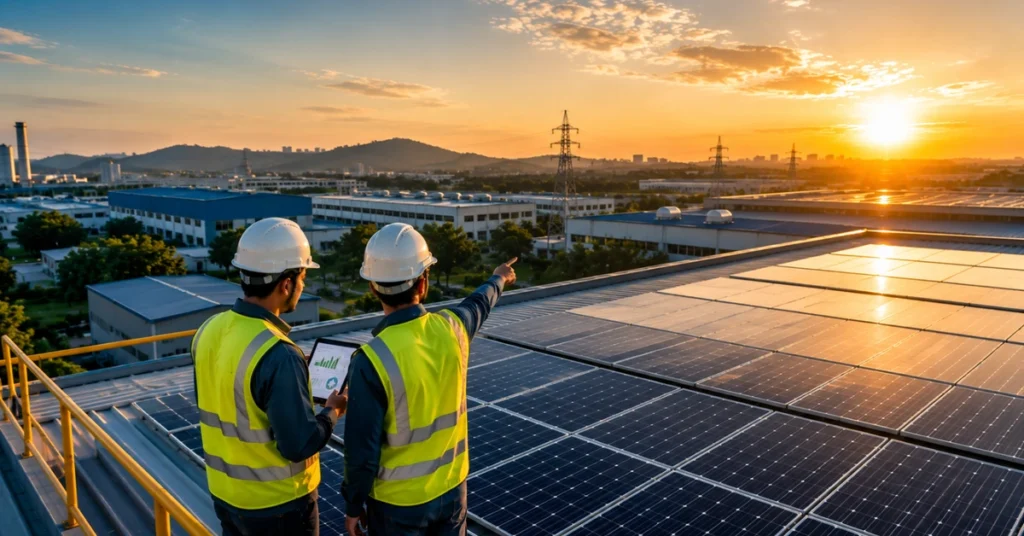
Industrial Solar Company
Blog, Commercial Solar Rooftop

Why Choosing the Right Industrial Solar Company Matters

Introduction For commercial and industrial businesses, electricity is a major operating expense that can directly influence production costs and long-term profitability. As businesses seek to control energy costs and meet sustainability goals, solar power has become a practical investment for factories, warehouses, manufacturing facilities, and other large-scale facilities. However, installing solar is not simply about purchasing panels. The right industrial solar company can make a significant difference in system design, energy generation, safety, project execution, and long-term returns. This is why businesses should evaluate the expertise and capabilities of their solar partner before investing. Why Industrial Businesses Are Investing in Rooftop Solar Large industrial facilities often have substantial rooftop areas that can be converted into productive energy assets. Industrial rooftop solar allows businesses to generate electricity at the point of consumption, helping to offset daytime grid consumption and reduce dependence on grid power. A professionally designed rooftop system can also make better use of available roof space while considering structural requirements, safety clearances, load profiles, and future expansion plans. What Services Should an Industrial Solar Company Provide A professional solar company provides much more than just industrial solar installation. The process should begin with understanding the facility and continue through engineering, execution, commissioning, and ongoing support. 1. Site Survey & Energy Assessment Before designing a solar system, engineers assess electricity consumption, roof or land availability, structural strength, existing electrical infrastructure, and future energy requirements. This helps create the right solar system based on the site’s specific needs rather than relying on a standardised design. 2. System Design & Engineering The design is tailored to the facility’s load profile and operational requirements. Factors such as module placement, mounting structures, electrical architecture, safety, generation potential, and monitoring should be considered. Alligator Solar conducts thorough pre-design site audits to create efficient rooftop and ground-mounted solar plants. We assess site constraints, prioritise safety, analyse load profiles, and factor in future expansion, ensuring tailored solutions that maximise your investment. 3. Industrial Solar Installation High-quality industrial solar installation requires engineering precision and safe project execution. An experienced industrial solar company manages the installation process to minimise disruption to ongoing industrial operations. What to Look for in an Industrial Solar Company Before selecting a solar partner, businesses should consider: Alligator Solar is your trusted partner for industrial solar solutions. We provide end-to-end project management, prioritise safety in execution, and offer reliable maintenance. With flexible financing options, transitioning to sustainable energy has never been easier. Let us help you harness solar power for a greener future. Benefits of Professional Industrial Solar Installation Choosing an experienced provider for industrial solar panel installation can help businesses achieve better system performance and long-term value.  Proper engineering can optimise available space and maximise energy generation, while quality installation and monitoring can support reliable operation. Conclusion Choosing the right industrial solar company is ultimately a business decision, not just a technology purchase. From energy assessment and system engineering to industrial solar panel installation, monitoring, and O&M, the capabilities of an industrial solar company can influence a project’s long-term performance and financial value. Frequently Asked Questions
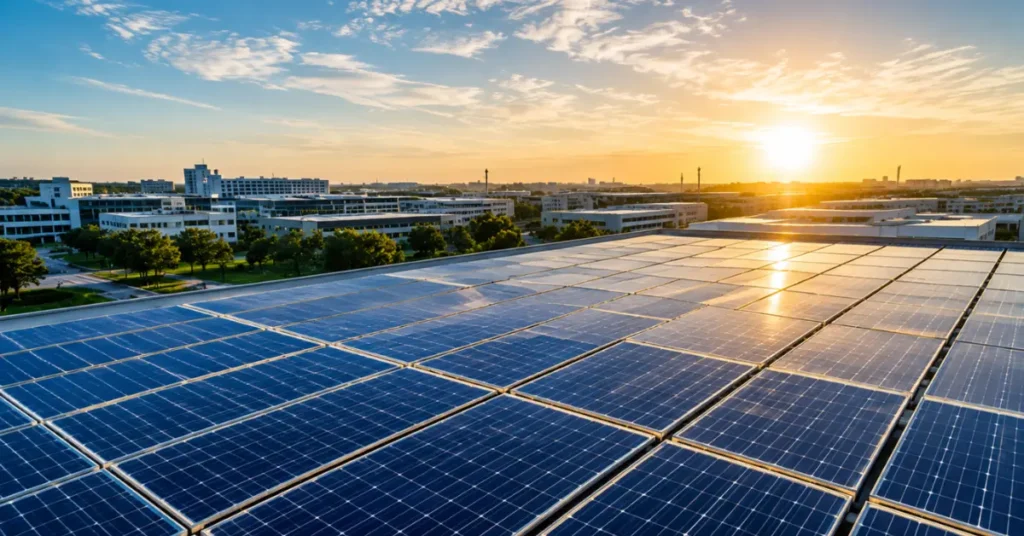
Why Commercial Solar Rooftop Systems Are a Smart Investment for Modern Businesses
Blog, Commercial Solar Rooftop

Why Should Modern Businesses Choose Commercial Solar Rooftop

Introduction For many businesses, electricity is one of the biggest operating expenses. As energy prices continue to rise, many companies are finding reliable ways to reduce their operating costs without affecting productivity. This is why commercial rooftop solar systems are becoming a preferred choice for many businesses. From manufacturing units and warehouses to office buildings, shopping complexes, and educational institutions, businesses are investing in solar energy to improve operational efficiency and lower expenses. A professional commercial solar installation not only lowers electricity bills but also provides reliable and sustainable energy for years. What is Commercial Solar Installation Commercial solar installation involves designing and installing solar power systems for commercial and industrial properties. This enables businesses to generate their own electricity, reduce dependence on the grid, and better manage energy costs over the long term. Why Businesses Are Investing in Commercial Solar Rooftop Systems Many businesses are adopting solar energy to meet environmental goals, improve their brand reputation, and promote sustainability initiatives. Government incentives and policies supporting renewable energy have also encouraged more companies to consider commercial solar solutions. Benefits of Commercial Solar Installation for Businesses A well-designed commercial solar system offers several benefits beyond just reducing monthly utility bills. 1. Lower Operating Costs Generating electricity on-site in commercial, industrial, and institutional buildings can significantly lower energy costs, allowing businesses to reinvest their savings into growth and expansion. 2. Long-Term Return on Investment Although installing a solar power system requires an initial investment, once installed, it generates electricity for decades, allowing businesses to recover costs through ongoing energy savings. 3. Energy Independence A commercial solar rooftop system reduces dependence on grid-supplied electricity and helps businesses manage energy costs, especially as electricity rates continue to rise. 4. Low Maintenance Requirements Modern solar panels are specially designed for durability, and they require very little maintenance. With regular inspections and cleaning, businesses can benefit from reliable performance of solar panels for many years. 5. Environmental Responsibility Solar energy produces clean electricity without harmful emissions, helping businesses reduce their carbon footprint while supporting a greener future. How to Choose the Right Commercial Solar Company The performance of a solar project depends largely on the expertise of the installation partner. Selecting an experienced commercial solar company ensures that every stage, from site analysis and system design to installation and ongoing support, is completed professionally. Understanding why choosing the right industrial solar company matters can help businesses make a more informed decision when selecting their solar partner.  When evaluating a solar partner, businesses should consider: Working with a reliable and trusted commercial rooftop solar company helps maximise system capacity and ensures that the business gets the best return on its investment. Why Choose Alligator Solar for Commercial Solar At Alligator Solar, we specialise in providing customised commercial solar solutions designed to meet the unique energy needs of every business. Alligator Solar focuses on providing end-to-end engineering, procurement, and construction (EPC) solutions to organisations, helping them reduce operating costs and maximise long-term energy savings. Conclusion As commercial and industrial businesses continue to seek cost-effective and eco-friendly energy solutions, commercial solar panels have emerged as a strong long-term investment. Professionally installed commercial solar panels can reduce electricity costs, improve energy reliability, and contribute to the sustainable growth of the business. Choosing an experienced partner like Alligator Solar ensures that your investment provides dependable performance, long-term savings, and a cleaner energy future Frequently Asked Questions Q1. What is a commercial solar rooftop system?   A commercial solar rooftop system is a solar power system installed on the roof of a business or commercial property. Q2. What are the benefits of a commercial solar rooftop system? A commercial solar rooftop system can reduce electricity costs, enhance ROI, protect against tariff changes, improve ESG performance, and optimise rooftop space. Q3. Is rooftop solar good for small businesses? Yes. Small factories, stores, clinics, and offices can all benefit if they have roof space and regular daytime power usage. Q4. Can rooftop solar improve business profitability? Yes. Lower recurring electricity costs can directly improve business margins. Q5. How long do commercial rooftop solar panels last? Commercial solar panels can typically operate for 25–30 years or more with proper maintenance and regular performance monitoring.