

Introduction
Running a business often means dealing with changing electricity requirements throughout the day. A manufacturing unit may operate several heavy machines simultaneously, while a commercial building may experience increased power consumption when cooling, lighting, and other systems run together.
Battery storage makes this possible by letting facilities store electricity in advance and use it when demand is highest.
With the help of a battery energy storage system (BESS), businesses can manage demand peaks, make better use of solar electricity and optimise their overall energy consumption.
Let’s understand how businesses can use BESS to manage peak electricity demand and what they should consider before investing in a storage solution.
Understanding Peak Electricity Demand in Businesses
Peak electricity demand refers to the highest amount of electrical power a business draws from the grid during a specific period. It generally occurs when several high-power machines, cooling systems, pumps or other electrical equipment operate simultaneously.
For example, a manufacturing plant may experience higher electricity demand when multiple production machines operate together. Similarly, a commercial building may consume more power when air conditioning, elevators, lighting and other systems run at the same time.
Depending on the electricity tariff, businesses may have to pay demand charges based on their highest recorded power consumption.
This means that even a short period of unusually high electricity demand can affect the demand-related component of a monthly electricity bill.
Understanding when these peaks occur is the first step towards managing electricity costs effectively.
What Is a Battery Energy Storage System?
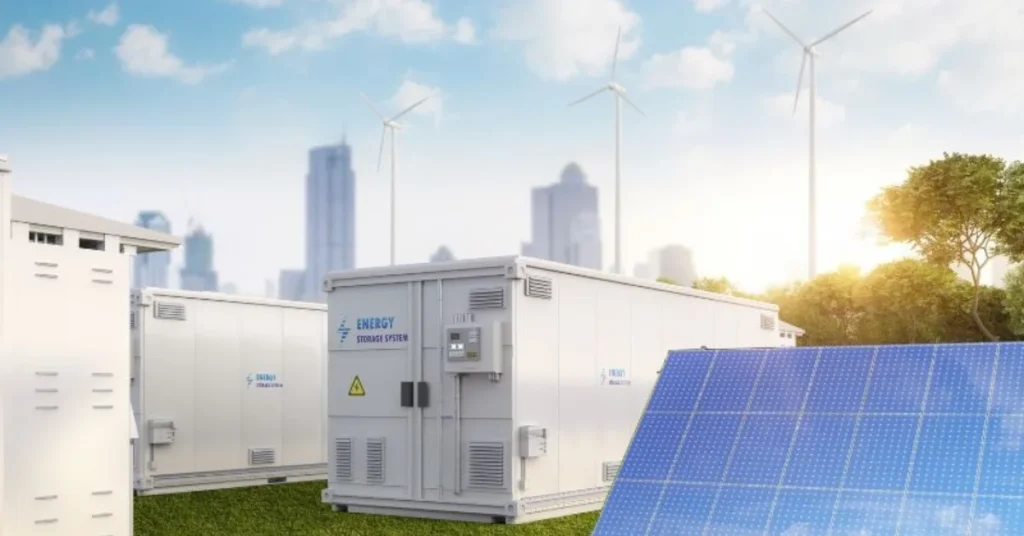
A battery energy storage system is a technology that stores electrical energy in rechargeable batteries and supplies it when required.
It can store electricity generated by rooftop solar panels or electricity drawn from the grid. The stored energy can then be used during peak demand periods, expensive tariff hours or power interruptions, depending on the system’s design.
A commercial BESS generally includes the following components:
- Battery Modules: Store electrical energy for later use.
- Battery Management System (BMS): Monitors battery conditions, temperature, voltage and charging levels to support safe operation.
- Power Conversion System (PCS): Converts electricity between AC and DC for charging and discharging.
- Energy Management System (EMS): Controls when the battery charges and discharges according to energy requirements.
- Thermal Management System: Helps maintain suitable operating temperatures.
These components work together to manage energy storage, electricity flow and system performance.
How Battery Storage Helps Businesses Manage Peak Electricity Demand
Battery storage can help businesses control electricity consumption without depending entirely on the grid during periods of high demand. Here are five important applications.
1. Reducing Peak Demand Through Peak Shaving
Peak shaving is one of the most common applications of commercial and industrial battery storage.
It involves using stored electricity to reduce the amount of power a facility draws from the grid when consumption reaches its highest level.
For example, consider a manufacturing facility with a peak electricity demand of 500 kW. During a high-demand period, its battery system supplies 100 kW of power. As a result, the facility draws approximately 400 kW from the grid while the battery is discharging.
This is a simplified example. Actual demand reduction depends on battery power capacity, available charge, operating duration and the facility’s load profile.
By reducing maximum grid demand, businesses may lower their demand-related electricity charges where the applicable tariff supports this benefit.
2. Shifting Electricity Consumption to Lower-Cost Hours
Electricity prices can vary throughout the day under Time-of-Day (ToD) tariffs.
Businesses can use battery storage to take advantage of these differences by charging batteries during lower-cost periods and using stored electricity during more expensive hours.
For example, a facility can charge its battery during designated lower-tariff hours and discharge it when electricity rates increase.
This approach is known as load shifting.
In India, the Ministry of Power introduced ToD tariff provisions through the Electricity (Rights of Consumers) Amendment Rules, 2023. These provisions specify different tariff structures for peak and solar hours for applicable consumers. Actual tariff timings and rates depend on the relevant State Electricity Regulatory Commission and applicable consumer category.
Therefore, businesses should review their electricity tariff before investing in battery storage.
3. Making Better Use of Rooftop Solar Energy
Commercial rooftop solar systems generate electricity mainly during daylight hours. However, a business’s highest electricity demand may occur later in the day when solar generation decreases.
Combining solar panels with battery storage can help address this difference.
A battery energy storage system stores surplus solar electricity when generation exceeds immediate consumption. Businesses can then use this stored energy during evening operations or periods of higher electricity demand.
This can help businesses:
- Increase the utilisation of solar-generated electricity.
- Reduce grid electricity consumption during peak periods.
- Manage changes in solar power generation.
- Improve overall energy management.
The actual benefits depend on solar generation, battery capacity, charging and discharging efficiency, and the facility’s electricity consumption pattern.
Also Read: Solar Open Access vs Rooftop Solar: Which Is Better for Your Business?
4. Managing Sudden Increases in Electricity Consumption
Industrial facilities often experience sudden increases in electricity demand when heavy machinery, motors and other equipment start operating together.
A properly configured battery system can respond to these changes by supplying additional power when grid consumption approaches a predefined limit.
For example, a production facility can use an energy management system to monitor electricity demand continuously. When consumption approaches its selected demand threshold, the battery supplies part of the required power.
This approach helps control short-duration demand spikes and can be particularly useful for manufacturing plants, warehouses and cold storage facilities.
5. Supporting Existing Electrical Infrastructure
As businesses expand, their electricity requirements may increase. Installing additional machinery or production equipment can place more pressure on existing electrical infrastructure.
In certain situations, battery storage can supply additional power during short-duration demand peaks and help manage these increases.
However, battery storage is not a replacement for necessary electrical infrastructure upgrades. Businesses must evaluate transformer capacity, electrical protection, load requirements and future expansion plans before selecting a system.
Industries That Can Benefit from Battery Energy Storage Systems
Different industries can use BESS technology according to their electricity consumption patterns.
| Industry | Potential Application |
| Manufacturing | Managing demand from heavy machinery |
| Commercial Buildings | Controlling HVAC and lighting demand |
| Data Centres | Supporting Critical Power Infrastructure |
| Warehouses | Managing Automation and Equipment Loads |
| Cold Storage | Supporting Refrigeration Energy Requirements |
| Hospitals | Supporting Critical Loads and Backup Power |
| Shopping Malls | Managing Cooling and Other Electrical Loads |
Also Read: Battery Energy Storage System: Why Businesses Need It
How to Choose the Right Battery Energy Storage System for Your Business
Choosing a battery storage solution requires proper technical and financial evaluation. Businesses should consider these important factors before installation.
Analyse Your Electricity Consumption
Review electricity bills and interval-based load data to identify when peak demand occurs, how long it lasts and how frequently it happens.
This information helps determine the required battery power and storage capacity.
Understand Battery Power and Storage Capacity
Battery power is measured in kilowatts (kW), while energy storage capacity is measured in kilowatt-hours (kWh).
Power determines how much electricity the battery can supply at a particular moment. Capacity determines how much energy it can store.
For example, a 100 kW / 200 kWh battery system can theoretically supply 100 kW for two hours under ideal conditions. Actual usable duration depends on operating limits, efficiency and available battery charge.
Also Read: Why Does Engineering Matter in a Solar EPC Company?
Evaluate Battery Technology and Safety
Businesses should evaluate battery chemistry, expected operating life, thermal management, monitoring systems and safety arrangements.
Lithium Iron Phosphate (LFP) batteries are commonly considered for commercial and industrial energy storage applications because of their thermal stability and cycle-life characteristics.
The system should also follow applicable electrical safety requirements and relevant standards.
Calculate Potential Savings
Compare the expected reduction in demand charges and energy costs against battery installation, maintenance, replacement and operating expenses.
The financial assessment should include battery efficiency losses, degradation and charging costs. This helps businesses understand whether the proposed investment makes economic sense.
Growing Importance of Battery Energy Storage Systems in India
The commercial and industrial sectors of India are exploring better ways to manage electricity consumption while increasing the use of renewable energy.
Government initiatives supporting energy storage and the introduction of Time-of-Day tariffs are creating greater opportunities for businesses to consider flexible energy management solutions.
The battery energy storage system in India is becoming increasingly relevant as industries look for ways to manage changing electricity demand and improve renewable energy utilisation.
Similarly, the battery energy storage system market is gaining attention as energy storage becomes an important part of modern power infrastructure.
According to India’s Ministry of Power, energy storage can support electricity system planning, renewable energy integration and peak demand management. These developments highlight the growing role of storage technologies in India’s energy transition.
As adoption increases, BESS battery energy storage systems can help commercial and industrial facilities manage electricity more effectively.
Conclusion
Managing peak electricity demand is an important step towards controlling energy costs and improving operational efficiency.
A battery energy storage system allows businesses to store electricity and use it when consumption increases. Through peak shaving, load shifting and better solar energy utilisation, businesses can improve how they manage electricity.
However, achieving the expected benefits requires proper load analysis, battery sizing, tariff evaluation and safety planning.
Are you looking to make your business more energy-efficient?
Connect with Alligator Solar to explore solar energy solutions that can help your business manage electricity consumption and move towards a more sustainable energy future